
Fire Alarm Certificates in London
Professional Fire Alarm Testing, Inspection & Certification
Arrange professional fire alarm testing and certification for your property in London. We inspect fire detection and alarm systems, identify faults and provide clear documentation to help property owners and responsible persons maintain their fire safety arrangements.
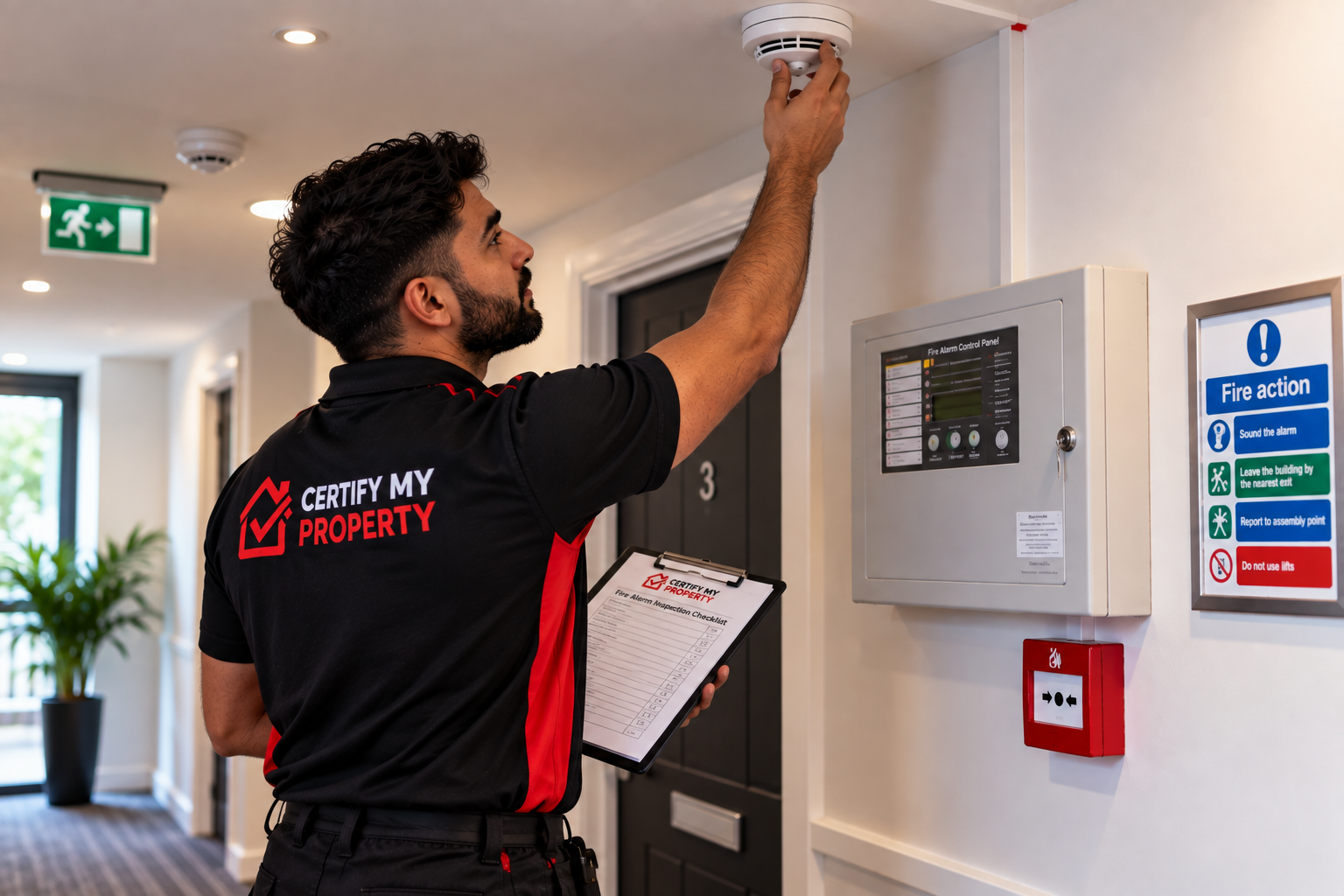
Fire Alarm Certificate Prices in London
Professional fire alarm inspections and certification for domestic, communal and commercial properties. Choose the option that best suits your fire alarm system and property requirements.
Fire Alarm Certificate
Domestic fire alarm inspection and certification
Final pricing depends on the alarm system, number of devices and inspection scope.
Larger Fire Alarm Systems
Inspection and certification for more complex installations
Tell us the property type, system category and approximate number of devices.
What Affects Fire Alarm Certificate Pricing?
A domestic Grade D alarm arrangement differs from a larger Grade A or commercial fire alarm system.
The number of detectors, sounders, manual call points and other components affects the inspection requirements.
Multiple floors, communal areas and restricted access can increase the time needed for testing.
Routine periodic inspections, servicing and commissioning have different testing and documentation requirements.
Inspection & Certification Are Not the Same as Repairs
Our fire alarm certificate service covers the agreed inspection and testing scope. If faults or non-compliances are identified, they will be recorded and any required remedial work can be discussed separately. A satisfactory outcome cannot be guaranteed before the inspection.
What Is a Fire Alarm Certificate?
A Fire Alarm Certificate is documentation produced following an inspection, test or other relevant assessment of a fire detection and alarm system.
Fire alarm systems are designed to provide an early warning of fire, helping occupants respond and evacuate. Regular inspection and testing are important for identifying faults that could affect the system's performance when it is needed.
Following the agreed inspection, the engineer records the relevant test results, observations and any defects identified. The documentation provided depends on the type of fire alarm system and the work carried out.
Our fire alarm inspection service is suitable for a range of properties, including domestic premises, HMOs, communal areas and commercial buildings, subject to the system and inspection requirements.
A professional fire alarm inspection helps identify problems with the equipment, operation or maintenance of your fire detection system.
Illustration only. The actual report format depends on the system and the inspection undertaken.
Fire Alarm Inspection, Servicing & Commissioning
These terms describe different activities. Understanding the distinction helps ensure you book the correct service for your property.
Inspection & Testing
Examination and testing of the fire alarm system to assess its condition and operation within the agreed scope.
Routine Servicing
Scheduled maintenance and testing intended to help keep an existing fire alarm system in effective working order.
Commissioning
Verification and testing following a new installation or significant alteration to confirm that the installed system operates as intended.
Not Sure Which Fire Alarm Service You Need?
Tell us about your property and fire alarm system. Our team can help establish the appropriate inspection or certification requirements before booking.
What's Included in Our Fire Alarm Inspection?
Our engineers inspect and test the relevant components of your fire detection and alarm system to assess its condition and operation. The checks carried out depend on the system type, accessibility and agreed inspection scope.
Fire Alarm Control Panel
Inspect the fire alarm control and indicating equipment, where installed, checking its displayed condition, indicators and relevant operating functions.
Smoke Detector Testing
Inspect and functionally test smoke detectors using appropriate methods to check that they respond and communicate with the alarm system as intended.
Heat Detector Testing
Check installed heat detectors using suitable test equipment and procedures to assess their response and operation within the system.
Manual Call Points
Examine and test relevant manual call points, where fitted, to confirm they can initiate an alarm signal and are accessible for use.
Alarm Sounders & Warning Devices
Check the operation of relevant audible and visual alarm devices to identify obvious defects or issues with alarm activation.
Power Supply & Backup Batteries
Assess relevant mains supplies, standby batteries and fault indications, where applicable, to identify issues that could affect the system's availability.
System Operation & Fault Indications
Check relevant alarm responses, indications and system functions to identify faults affecting normal operation or the transmission of alarm signals.
Maintenance Records & Logbook
Review available fire alarm maintenance records, previous inspection information and logbook entries where relevant to the system and service.
Inspection Findings & Documentation
Record the inspection findings, relevant test results, observed defects and recommendations, with documentation appropriate to the work undertaken.
A domestic Grade D interlinked alarm system does not have the same components or inspection requirements as a Grade A or commercial fire alarm installation. We carry out the checks relevant to your particular system and the agreed inspection scope.
Make Sure Your Fire Alarm System Is Properly Inspected
Arrange professional fire alarm testing and inspection in London, with domestic certificates starting from £99.
Types of Fire Alarm Systems We Inspect
Different properties require different fire detection and alarm arrangements. From interlinked domestic alarms to larger control-panel-based installations, our inspection services cover a range of system types, subject to the equipment and inspection requirements.
Grade A Fire Alarm Systems
Grade A systems typically include fire alarm control and indicating equipment, detectors, sounders and, where required, manual call points. They are often found in larger HMOs and communal fire alarm installations.
Grade D1 Fire Alarm Systems
Grade D1 systems use mains-powered smoke and heat alarms with tamper-proof standby batteries. The alarms can be interconnected to provide warning across the relevant areas of a property.
Grade D2 Fire Alarm Systems
Grade D2 systems are mains-powered alarms with user-replaceable standby batteries. They may be found in existing domestic installations, depending on the property's fire safety requirements.
Conventional Fire Alarm Systems
Conventional systems group detectors and call points into zones connected to a central control panel. When an alarm is triggered, the panel identifies the relevant zone rather than the individual device.
Addressable Fire Alarm Systems
Addressable systems allow compatible control equipment to identify individual devices, helping locate alarm activations and faults more precisely. These systems are commonly used in larger or more complex buildings.
Interlinked Domestic Alarms
Interlinked alarms are designed so that activation of one alarm triggers the connected alarms. Depending on the installation, interconnection may be wired or wireless.
What's the Difference Between Grade A and Grade D?
Control-Panel-Based Systems
Grade A systems incorporate fire alarm control and indicating equipment and are designed, installed and maintained to the relevant requirements for this type of system.
Domestic Mains-Powered Alarms
Grade D systems use mains-powered domestic alarms with standby battery arrangements. Grade D1 and D2 describe different types of backup battery provision.
Not Sure What Type of Fire Alarm System You Have?
Our team can help you identify the relevant system details and arrange an appropriate inspection. Domestic fire alarm certificates start from £99.
Fire Alarm Certificates for Landlords, HMOs & Businesses
Fire alarm inspection requirements vary depending on the property type, its use and the fire detection system installed. We help landlords, property managers and business owners arrange professional testing and appropriate documentation.
Landlords & Rental Properties
Landlords must ensure appropriate smoke and carbon monoxide alarm provisions are met and that relevant fire safety obligations are addressed throughout the tenancy.
HMO Fire Alarm Certificates
Houses in Multiple Occupation may require enhanced fire detection arrangements, depending on their layout, occupancy, risk assessment and licensing conditions.
Communal Areas & Blocks of Flats
Where a communal fire alarm system is installed, appropriate inspection and maintenance arrangements help the responsible person manage the system.
Commercial Fire Alarm Certificates
Commercial premises require suitable fire safety arrangements based on the building's risks and occupancy. Fire alarm servicing and testing form part of ongoing system maintenance.
Who Is Responsible for Fire Alarm Maintenance?
Responsibility depends on the type of property and the legal duties that apply to it.
In many non-domestic premises and relevant communal areas, the responsible person must ensure appropriate fire safety measures are maintained, including any necessary fire detection and alarm systems.
Landlords and HMO operators may also have specific requirements under housing legislation, licensing conditions and applicable fire safety rules.
Important: A fire alarm certificate does not replace a Fire Risk Assessment, routine user checks or the maintenance obligations that apply to the premises.
Establish the appropriate alarm provision for the property using the relevant assessment and applicable requirements.
Carry out appropriate user tests and scheduled professional servicing for the system installed.
Retain relevant service reports, test records and fire alarm logbook information.
Arrange suitable remedial action where inspection or testing identifies faults affecting the fire alarm system.
Fire Alarm Inspections for Your Property
Whether you manage a rental property, HMO, communal building or business premises, our team can help you arrange the appropriate fire alarm inspection.
Fire Alarm Testing Standards & Legal Requirements
Understanding the standards and maintenance responsibilities that apply to your fire alarm system helps you arrange the right inspections, maintain accurate records and identify when professional servicing is required.
BS 5839-1
Fire Detection & Alarm Systems in Non-Domestic Premises
BS 5839-1 provides recommendations for the design, installation, commissioning and maintenance of fire detection and alarm systems in non-domestic premises.
BS 5839-6
Fire Detection & Alarm Systems in Domestic Premises
BS 5839-6 provides recommendations for fire detection and alarm systems in domestic premises, including system grades, detection coverage categories and maintenance.
How Often Should a Fire Alarm Be Tested?
Fire alarm systems require a combination of routine user checks and, where applicable, professional servicing. The correct frequency depends on the system and relevant requirements.
Weekly Fire Alarm Tests
For many non-domestic fire alarm systems, BS 5839-1 recommends a weekly user test, normally using a different manual call point in rotation.
Periodic Professional Servicing
Non-domestic systems are commonly serviced at intervals not exceeding six months, in accordance with applicable BS 5839-1 recommendations and system requirements.
Domestic Alarm Maintenance
Domestic smoke and heat alarms should be tested and maintained in line with the manufacturer's instructions, applicable standards and any additional property requirements.
Important: Weekly testing and professional servicing are different activities. A weekly user test does not replace professional maintenance, and a professional inspection does not remove the need for ongoing routine checks.
Understanding Your Legal Responsibilities
The Regulatory Reform (Fire Safety) Order 2005 places duties on responsible persons for relevant premises in England and Wales.
These duties include taking appropriate fire safety precautions and ensuring relevant fire safety equipment and systems are subject to suitable maintenance arrangements.
The Fire Safety Order generally applies to workplaces and relevant common parts of residential buildings, rather than the interior of individual private dwellings.
Remember: A fire alarm certificate is evidence of the work recorded on it. It does not, by itself, establish that all fire safety obligations have been met.
Identify relevant fire hazards, risks and appropriate fire safety precautions.
Ensure fire detection and warning arrangements are suitable for the premises.
Arrange relevant routine checks and professional servicing where required.
Maintain suitable records of inspections, servicing, faults and corrective action.
How Long Is a Fire Alarm Certificate Valid?
There is no universal 12-month legal expiry date for every fire alarm certificate. The next inspection or servicing date depends on the system, relevant standards, risk assessment and maintenance arrangements. Commercial systems may require professional servicing more frequently than once a year.
Keep Your Fire Alarm Inspection Records Up to Date
Arrange professional fire alarm testing and inspection with clear documentation. Domestic fire alarm certificates start from £99.
Professional Fire Alarm Certification With a Service You Can Trust
We make arranging fire alarm inspections straightforward for landlords, property managers and businesses across London. From understanding your system to receiving your inspection documentation, our focus is on clear communication, professional testing and practical advice.
Professional Inspections
Fire alarm inspections and testing arranged according to the type of system installed and the agreed inspection requirements.
Clear, Upfront Pricing
Domestic fire alarm certificates start from £99, with pricing for larger systems based on their size and inspection scope.
Clear Digital Reports
Receive inspection documentation recording the relevant findings, test results and any defects identified during the visit.
Convenient London Appointments
Arrange an inspection at a suitable available appointment time, with support for landlords, tenants and managing agents.
Efficient Documentation
We aim to provide completed inspection documentation within 24–48 hours, where the required information is available.
Practical Recommendations
Where defects are identified, we explain the recorded findings so you can understand what further action may be needed.
Book Your Fire Alarm Inspection With Confidence
Domestic fire alarm certificates from £99. For communal and commercial systems, contact our team to discuss the inspection requirements.
Our Fire Alarm Certification Process
Arranging a fire alarm inspection shouldn't be complicated. We've made the process straightforward, from identifying the system installed at your property to receiving clear inspection documentation.
Book Your Inspection
Contact our team to arrange a suitable appointment. We'll ask for relevant property and fire alarm system details to help establish the inspection requirements.
Engineer Inspection & Testing
Our engineer attends the property and carries out the relevant checks on the fire detection and alarm system, according to its type and the agreed scope.
Findings & Recommendations
The inspection findings are recorded, including relevant test results, identified faults and recommendations for any further action required.
Receive Your Digital Report
Your inspection documentation is prepared and issued digitally. We aim to provide reports within 24–48 hours, subject to the information needed to complete them.
How to Prepare for Your Fire Alarm Inspection
A little preparation can help your engineer carry out the agreed inspection efficiently. Please make sure the relevant equipment and areas are accessible on the day.
For larger or commercial systems, our team may request additional information before confirming the inspection scope and price.
Ensure the engineer can access the areas containing the relevant alarm equipment.
For panel-based systems, provide access to the control panel and any necessary authorised operating information.
Where available, provide the fire alarm logbook, previous reports and relevant maintenance information.
Let occupants or building management know that alarm testing may take place during the appointment.
Ready to Get Your Fire Alarm System Inspected?
Arrange professional fire alarm testing in London. Domestic fire alarm certificates start from £99, with larger systems priced according to their requirements.
Fire Alarm Certificate Frequently Asked Questions
Find answers to common questions about fire alarm certificates in London, including inspection costs, testing requirements, fire safety standards and the documentation you may need for your property.
01 How much does a fire alarm certificate cost in London?
At Certify My Property, domestic fire alarm certificates start from £99. The cost of inspecting larger systems, including commercial and communal fire alarm installations, depends on the system type, number of devices and inspection requirements.
Contact our team for pricing if your property has a larger or more complex fire alarm system.
02 What is a fire alarm certificate?
A fire alarm certificate or inspection report is documentation recording the relevant inspection and testing carried out on a fire detection and alarm system.
Depending on the service, it may include the system details, inspection findings, test results, identified defects and recommendations for further action.
03 How long is a fire alarm certificate valid?
There is no single legal expiry period that applies to every fire alarm certificate.
The appropriate inspection and servicing intervals depend on the type of system, applicable standards, fire risk assessment and maintenance arrangements. Many non-domestic fire alarm systems require professional servicing at intervals not exceeding six months.
04 How often should a fire alarm system be tested?
Many non-domestic fire alarm systems are subject to weekly user testing, alongside scheduled professional servicing in accordance with relevant BS 5839-1 recommendations.
Domestic smoke and heat alarms should be tested and maintained in line with the manufacturer's instructions, applicable standards and any additional property requirements.
05 Do landlords need a fire alarm certificate?
Landlords must meet the smoke and carbon monoxide alarm requirements applicable to their rental properties, together with any relevant housing and fire safety obligations.
A separate fire alarm certificate is not universally required for every ordinary rental property. However, inspections and documented maintenance may be necessary depending on the system installed, property type and applicable conditions.
06 Do HMOs require fire alarm inspections?
Houses in Multiple Occupation often have enhanced fire safety requirements due to their occupancy and layout.
The appropriate fire detection system and inspection arrangements depend on factors such as the property design, fire risk assessment, applicable standards and HMO licensing conditions. Some HMOs have Grade A systems, while others use Grade D arrangements.
07 What is included in a fire alarm inspection?
Depending on the system type and agreed inspection scope, checks may include:
- Fire alarm control panels
- Smoke and heat detectors
- Manual call points
- Alarm sounders and visual warning devices
- Power supplies and backup batteries
- System operation and fault indications
- Available maintenance records
The inspection findings are then recorded in the relevant documentation.
08 What is the difference between BS 5839-1 and BS 5839-6?
BS 5839-1 provides recommendations for fire detection and alarm systems in non-domestic premises.
BS 5839-6 covers fire detection and alarm systems in domestic premises, including system grades and detection coverage categories.
The relevant standard depends on the premises and the system being assessed.
09 Can you inspect Grade A and Grade D fire alarm systems?
We can discuss inspection arrangements for Grade A and Grade D systems, subject to the equipment installed and the service required.
Grade A systems generally use control and indicating equipment, while Grade D systems use mains-powered domestic alarms with standby battery arrangements.
Please provide your system details when enquiring so we can confirm the appropriate service and pricing.
10 Do commercial properties need fire alarm certificates?
Commercial premises must have suitable fire safety arrangements based on their risks and the requirements that apply to them.
Where a fire detection and alarm system is installed, appropriate testing, servicing and maintenance records can help the responsible person demonstrate that the system is being managed.
The precise requirements depend on the premises and the system.
11 What happens if my fire alarm system fails the inspection?
If defects or other concerns are identified, they will be recorded in the inspection documentation as appropriate.
Further investigation, repairs or remedial work may be required. These works are separate from the standard inspection unless specifically included in the agreed service.
An inspection does not guarantee a satisfactory outcome.
12 How quickly will I receive my fire alarm certificate?
We aim to provide completed fire alarm inspection documentation within 24–48 hours following the visit, provided the information required to prepare the report is available.
More complex systems or reports requiring further clarification may take longer. Our team can advise if additional information is needed.
Still Have Questions About Your Fire Alarm System?
Our team can help you understand which inspection service may be suitable for your property.
Book Your Fire Alarm Certificate in London
Arrange professional fire alarm testing and inspection for your property. Whether you're a landlord, HMO operator, managing agent or business owner, our team can help you arrange the appropriate service.
Fire alarm inspection and certification for eligible domestic systems, subject to the inspection scope.
Explore Our Property Certificate Bundles
Looking for additional services such as EICR, EPC or Gas Safety Certificates? Explore our certificate bundles and available combined services.