
PAT Testing Services in London
Portable Appliance Testing for Homes, Landlords & Businesses
Keep your electrical equipment checked and properly documented with professional Portable Appliance Testing (PAT). We provide PAT testing across London for domestic and commercial properties, with clear pricing, appliance labels and digital inspection reports.
Up to 20 appliances
Up to 20 appliances
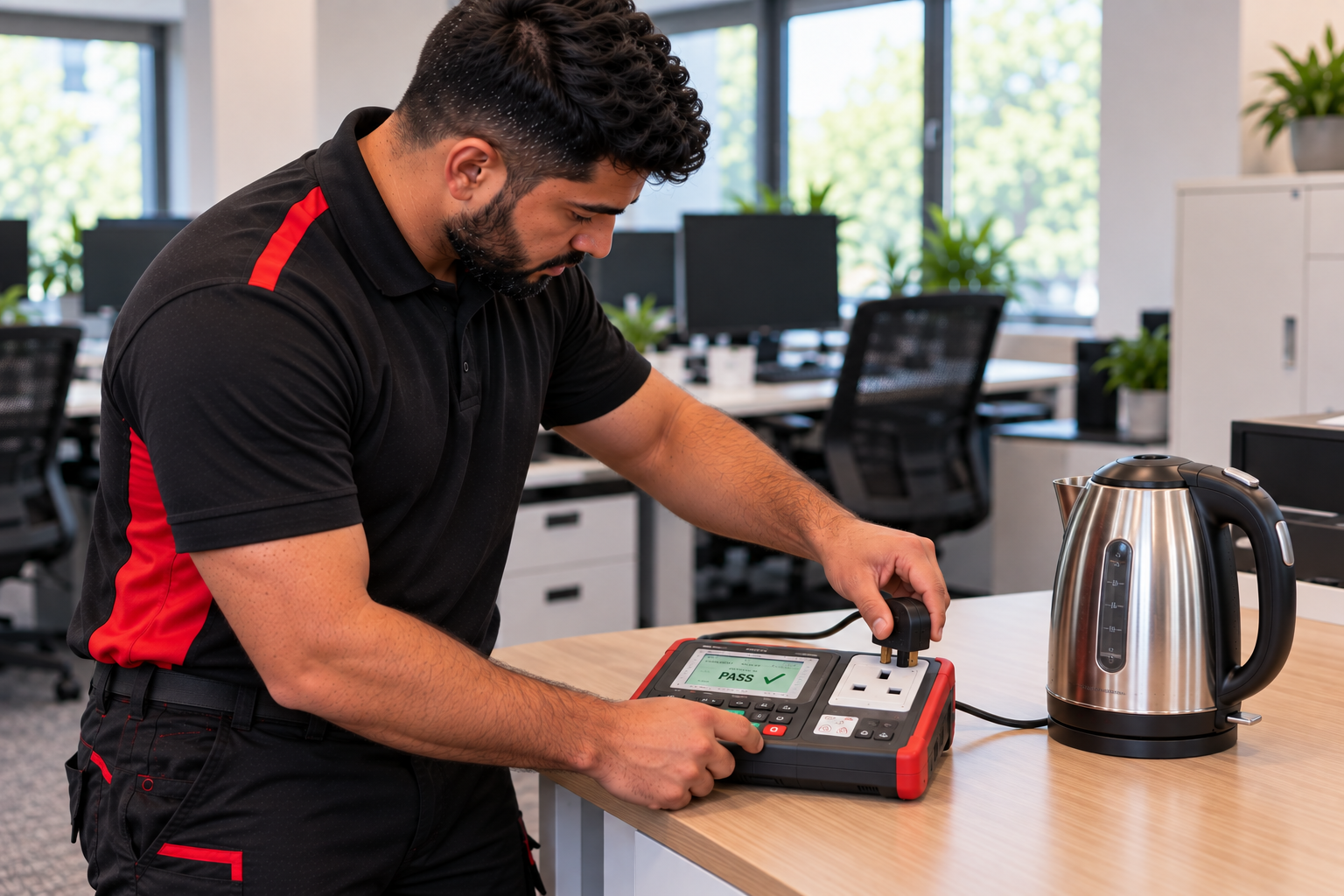
PAT Testing Prices in London
Straightforward pricing for domestic and commercial Portable Appliance Testing. Our standard packages cover up to 20 appliances, with additional items charged individually.
Domestic PAT Testing
Portable Appliance Testing for rental properties, furnished accommodation and other domestic premises.
- Up to 20 portable appliances
- Visual inspection of accessible equipment
- Appropriate electrical safety tests
- Appliance pass/fail labelling
- Digital PAT testing report
- Recorded defects and recommendations
Commercial PAT Testing
PAT testing for offices, shops, hospitality venues and workplaces with portable electrical equipment.
- Up to 20 portable appliances
- Visual inspection of accessible equipment
- Appropriate electrical safety tests
- Appliance pass/fail labelling
- Digital PAT testing report
- Recorded defects and recommendations
How Much Will PAT Testing Cost?
Here are a few examples using our standard prices. Each package includes up to 20 appliances, with £1.90 charged for each additional item.
| Number of Appliances | Domestic | Commercial |
|---|---|---|
| Up to 20 items | £99.00 | £120.00 |
| 30 items | £118.00 | £139.00 |
| 40 items | £137.00 | £158.00 |
| 50 items | £156.00 | £177.00 |
Prices shown are illustrative calculations based on the standard per-item rates. Confirm the applicable quotation and any special access or equipment requirements before booking.
PAT Testing Covers the Inspection, Not Appliance Repairs
PAT testing is intended to assess the electrical safety of the appliances inspected. If an appliance is found to be unsafe, the issue will be recorded and the equipment should not continue to be used until appropriate action has been taken. Repairs or replacement appliances are not included in the standard testing price.
Book Professional PAT Testing for Your Property
Domestic PAT testing from £99 and commercial PAT testing from £120, both covering up to 20 appliances.
What Is PAT Testing?
Portable Appliance Testing (PAT) is the process of inspecting and, where appropriate, electrically testing equipment to help determine whether it is safe for continued use.
Electrical appliances can develop damage, deterioration or faults over time. These issues may affect the safety of equipment used in homes, rented accommodation, offices and other workplaces.
PAT testing combines visual examination with appropriate electrical checks. The tests carried out depend on the appliance, its construction and the relevant testing requirements.
PAT testing provides useful information about the condition of the appliances inspected, helping property owners and businesses identify potential electrical safety concerns and maintain appropriate inspection records.
Inspect. Test. Document.
A practical approach to assessing the condition of portable electrical equipment.
What Does PAT Testing Involve?
The process typically includes three important stages, helping to identify defects and provide a record of the appliances inspected.
Visual Inspection
The appliance, accessible cable and plug are examined for visible signs of damage, overheating, unsuitable repairs or other conditions that could affect safety.
Electrical Testing
Suitable electrical tests are carried out where appropriate. These may include earth continuity, insulation resistance or alternative tests selected for the equipment being assessed.
Labelling & Reporting
Inspection and test results are recorded in a PAT report. Appliances are labelled as appropriate, helping identify tested equipment and any items requiring attention.
Is PAT Testing a Legal Requirement?
UK health and safety legislation requires electrical equipment to be maintained so that it does not present danger. However, the law does not impose a universal annual PAT testing requirement for every appliance. The appropriate inspection and testing arrangements depend on the equipment, its use and the level of risk.
Arrange Portable Appliance Testing for Your Property
Domestic PAT testing from £99 and commercial PAT testing from £120, covering up to 20 appliances.
What's Included in Our PAT Testing?
Our Portable Appliance Testing service combines visual inspections, appropriate electrical tests and clear documentation to help identify potential safety issues with electrical equipment.
Plug & Fuse Inspection
Accessible plugs are checked for visible damage, overheating and suitability. Where appropriate, we also examine plug wiring, connections and fuse ratings.
Cable & Flex Condition
Power cables and flexible leads are inspected for cuts, exposed conductors, damaged insulation, crushing, strain and other visible signs of deterioration.
Appliance Visual Inspection
Appliance casings, accessible components, switches and connections are examined for damage, overheating, contamination or signs of unsafe modification.
Earth Continuity Testing
Where applicable, protective earth continuity is checked on Class I appliances to help confirm that accessible conductive parts have an effective earth connection.
Insulation Resistance Testing
Suitable equipment may undergo insulation resistance testing to help identify deterioration or faults in electrical insulation. Testing methods are selected to suit the appliance.
Alternative Electrical Tests
Where conventional testing is unsuitable, appropriate alternative methods may be used, such as leakage-current or substitute leakage testing, depending on the equipment.
Appliance Labelling
Tested appliances are labelled as appropriate to indicate their inspection status and help identify equipment requiring further attention.
Appliance Inventory & Results
Equipment inspected is recorded with relevant identification details, inspection findings and test results, providing a useful record for property management.
Digital PAT Testing Report
Following the inspection, a digital report is provided documenting the equipment tested, relevant results and any defects or recommendations identified during the visit.
Not Every Appliance Requires the Same Tests
The appropriate inspection and testing procedure depends on the appliance's electrical classification, construction, condition and intended use. For example, Class I appliances generally require protective earth checks, whereas Class II appliances do not have a protective earth connection. Some sensitive electronic equipment may require alternative testing methods.
Check appliance condition
Carry out suitable checks
Identify inspected items
Document findings
Get Your Electrical Appliances Professionally Tested
Domestic PAT testing from £99 and commercial PAT testing from £120, covering up to 20 appliances. Additional items are £1.90 each.
Which Appliances Need PAT Testing?
PAT testing can be appropriate for a wide range of electrical equipment used in homes, rental properties and workplaces. The need for inspection and testing depends on the appliance, how it is used and the risks associated with its environment.
Computers & Monitors
Desktop computers, monitors, docking stations and other electrical equipment commonly found in offices and workplaces.
Kettles & Kitchen Appliances
Kettles, toasters, microwaves, coffee machines and other portable electrical appliances used in kitchens and staff areas.
Printers & Office Machines
Printers, scanners, shredders, photocopiers and similar electrical equipment used in commercial premises.
Extension Leads & Adaptors
Extension leads, multi-socket extension blocks and detachable power leads, where suitable for inspection and testing.
Portable Power Tools
Drills, sanders, grinders and other portable electrical tools used in workshops, maintenance work and construction environments.
Portable Heaters & Fans
Portable electric heaters, desk fans, air circulators and other movable electrical equipment used in occupied rooms.
Chargers & Power Supplies
Laptop chargers, external power supplies and other mains-powered charging equipment, where suitable for the relevant inspection or test.
Rental Property Appliances
Landlord-provided electrical appliances such as televisions, lamps, washing machines and other accessible equipment within furnished accommodation.
Class I vs Class II Electrical Appliances
The electrical classification of an appliance helps determine which safety tests are appropriate during PAT testing.
Earthed Appliances
Class I appliances rely on basic insulation and a protective earth connection for electrical safety. Suitable PAT testing generally includes checking the continuity of the protective earth conductor.
Double-Insulated Appliances
Class II appliances use double or reinforced insulation rather than relying on a protective earth. These appliances do not require an earth continuity test, although other appropriate checks may apply.
Does Every Electrical Appliance Need PAT Testing?
Not necessarily. There is no universal requirement for every electrical appliance to undergo PAT testing at fixed intervals. The need for inspection and testing depends on factors such as equipment type, usage, environment and the likelihood of damage. Some equipment may need only visual checks, while other appliances may require more detailed electrical testing.
Not Sure Which Appliances Need Testing?
Our team can help you discuss the equipment at your property and arrange a suitable PAT testing visit. Domestic testing starts from £99.
PAT Testing for Landlords & Businesses
From furnished rental accommodation to busy commercial workplaces, our PAT testing service helps property owners, landlords and businesses assess portable electrical equipment and maintain useful inspection records.
PAT Testing for Landlords
PAT testing for landlord-provided electrical appliances in furnished rental properties, helping identify damaged or unsafe equipment and document inspection findings.
- Furnished rental properties
- Landlord-provided appliances
- End-of-tenancy and periodic checks
PAT Testing for HMOs
Inspection and testing of appropriate electrical appliances in Houses in Multiple Occupation, including equipment supplied for shared kitchens and communal living areas.
- Shared kitchen appliances
- Communal electrical equipment
- Appliance inventories and reports
Office PAT Testing
PAT testing for offices and professional workplaces, covering suitable equipment such as computers, monitors, printers, chargers and extension leads.
- Computers and monitors
- Printers and office equipment
- Extension leads and power supplies
Retail & Shop PAT Testing
Electrical appliance inspections for shops, salons, showrooms and retail premises, including equipment used by employees and customers.
- Retail electrical equipment
- Staff room appliances
- Portable display equipment
Restaurants & Hospitality
PAT testing for suitable portable appliances in restaurants, cafés, hotels and hospitality environments, where equipment may be used frequently.
- Portable catering appliances
- Staff and guest room equipment
- Reception and office appliances
Other Commercial Premises
PAT testing for a range of commercial environments, including studios, workshops, community premises and other workplaces with portable electrical equipment.
- Studios and workspaces
- Workshops and maintenance areas
- Community and business premises
Who Is Responsible for Portable Appliance Safety?
Responsibilities vary depending on who owns the equipment, where it is used and the applicable legal duties.
Landlords & Property Managers
Landlords should ensure that electrical appliances they supply are safe for tenants to use. Appropriate visual inspections and PAT testing can help identify deterioration and provide evidence of equipment checks.
- Condition of supplied appliances
- Checks between tenancies
- Appropriate maintenance records
Employers & Businesses
Employers and businesses have duties to manage electrical risks in the workplace. A suitable programme of inspection, maintenance and testing can help manage the safety of work equipment.
- Workplace equipment condition
- Frequency and type of equipment use
- Risk-based inspection arrangements
Important: PAT testing is not automatically a legal requirement every 12 months for every property or appliance. Inspection and testing intervals should reflect the equipment, its environment, usage and relevant risk assessment. Additional requirements may apply under particular licensing or contractual arrangements.
One Service for Your Property's Portable Electrical Equipment
Whether you manage a rental property or a commercial workplace, our team can help arrange PAT testing and provide digital inspection records.
PAT Testing Regulations & Frequency
Understanding when portable electrical equipment should be inspected and tested is an important part of managing electrical safety in rental properties and workplaces.
Is PAT Testing a Legal Requirement?
UK legislation requires electrical equipment to be maintained so that it does not present danger. However, there is no general legal requirement for every portable appliance to undergo PAT testing annually.
The appropriate inspection and testing arrangements depend on the equipment, how it is used, its working environment and the likelihood of damage or deterioration.
A suitable programme of visual checks, maintenance and, where necessary, electrical testing can help landlords and businesses manage these risks.
Testing should be proportionate to the risk rather than based on a fixed interval applied to every appliance.
Electrical Safety Is the Requirement.
PAT testing is one way to help demonstrate that electrical equipment is being checked and maintained appropriately.
What Regulations Apply to Electrical Appliances?
Several legal duties can be relevant depending on the type of property, equipment and activity involved.
Electricity at Work Regulations 1989
Require electrical systems, including relevant electrical equipment used at work, to be maintained so as to prevent danger, so far as reasonably practicable.
Health and Safety at Work etc. Act 1974
Establishes general duties for employers and others to manage risks to employees and people who may be affected by work activities.
Provision and Use of Work Equipment Regulations 1998
Require work equipment within their scope to be suitable, maintained and inspected where necessary to protect safety.
Landlord & Property Safety Responsibilities
Landlords should ensure supplied electrical appliances are safe. Particular licensing conditions, local requirements or contractual arrangements may also apply.
How Often Should PAT Testing Be Carried Out?
There is no single testing interval suitable for all appliances. The following factors help determine how frequently equipment should be checked.
Different appliances have different construction, protection and safety risks.
Equipment exposed to moisture, dust, heat or physical damage may need closer attention.
Frequently handled or moved equipment may deteriorate more quickly than stationary items.
Earlier faults, repairs and damage history can influence future inspection needs.
Examples of Different Risk Levels
Equipment such as a desktop monitor that is rarely moved may require less frequent formal testing, subject to its condition and use.
Portable tools and appliances exposed to frequent handling, movement or demanding environments may need more regular checks.
Important: These examples illustrate how risk can affect inspection frequency. They are not fixed testing schedules. Inspection intervals should be determined using a suitable risk-based approach.
PAT Testing vs EICR: What's the Difference?
PAT testing and Electrical Installation Condition Reports assess different parts of a property's electrical safety.
PAT Testing
Focuses on the condition and electrical safety of individual appliances and suitable electrical equipment.
APPLIANCES & EQUIPMENTEICR Inspection
Assesses the condition of a property's fixed electrical installation, including relevant circuits and protective devices.
FIXED ELECTRICAL INSTALLATIONArrange Your Next PAT Testing Appointment
Domestic PAT testing from £99 and commercial PAT testing from £120, covering up to 20 appliances. Additional items cost £1.90 each.
Professional PAT Testing, Made Simple.
Whether you're arranging PAT testing for a furnished rental property or a busy workplace, we aim to make the process straightforward, with clear pricing, appropriate testing and useful documentation.
One Booking.
Clear Results.
From the initial enquiry through to your digital PAT testing report, our service is designed to help you understand what has been inspected and whether any appliances require attention.
Transparent PAT Testing Prices
Clear standard pricing for domestic and commercial appointments, with a published per-item charge for appliances beyond the first 20.
Appropriate Electrical Checks
Appliances are visually inspected and electrically tested where appropriate, using methods suited to the equipment being assessed.
Digital PAT Testing Reports
Receive a digital record of inspected equipment, relevant test results and any defects or recommendations identified.
Domestic & Commercial Testing
Suitable for landlord-provided appliances, HMOs, offices, retail premises, hospitality businesses and other workplaces.
London Property Coverage
Arrange PAT testing for properties across London, with appointment options discussed according to location and availability.
Convenient Booking Process
Tell us your property type, location and approximate appliance count so we can help arrange a suitable appointment.
Arrange Your PAT Testing Appointment
Speak to our team about your property, the number of appliances and a suitable testing appointment.
How Our PAT Testing Service Works
We make arranging Portable Appliance Testing in London straightforward. From confirming your appointment to documenting the inspection results, here's what you can expect from our service.
Request Your PAT Testing
Contact our team with your property address, property type and approximate number of electrical appliances requiring inspection.
Arrange a Suitable Visit
We'll discuss appointment availability and confirm the booking arrangements, including access to the property and the equipment to be inspected.
Appliances Are Inspected
Our tester carries out visual checks and appropriate electrical tests, records the findings and labels the inspected equipment.
Receive Your PAT Report
Receive digital documentation recording the appliances inspected, applicable test results and any identified defects.
What Happens During Your PAT Testing Visit?
A little preparation can help your appointment run smoothly and ensure the relevant electrical equipment is available for inspection.
ASK OUR TEAM A QUESTIONMake Appliances Accessible
Ensure equipment, plugs and power leads can be accessed safely for inspection.
Allow for Temporary Disconnection
Some electrical tests require appliances to be switched off and disconnected briefly from the mains supply.
Identify Equipment to Be Tested
Let us know about specialist, sensitive or difficult-to-access equipment before the appointment.
Review the Findings
Your digital report will help you identify inspected items and any equipment requiring further attention.
Domestic PAT testing costs £99 for up to 20 items, while commercial PAT testing costs £120 for up to 20 items. Each additional appliance costs £1.90.
Ready to Arrange Your Inspection?
Contact Certify My Property to discuss your PAT testing requirements and arrange a suitable appointment in London.
PAT Testing Frequently Asked Questions
Find answers to common questions about Portable Appliance Testing in London, including costs, legal responsibilities, inspection frequency and what happens during an appointment.
01 How much does PAT testing cost in London?
Our domestic PAT testing service costs £99 for up to 20 appliances. Commercial PAT testing costs £120 for up to 20 appliances. Each additional item is charged at £1.90.
For example, testing 30 domestic appliances costs £118, while testing 30 commercial appliances costs £139.
02 Is PAT testing a legal requirement in the UK?
There is no general legal requirement for every portable appliance to undergo PAT testing at a fixed interval.
However, relevant UK legislation requires electrical equipment to be maintained safely. PAT testing can form part of an appropriate inspection and maintenance programme. Specific licensing or contractual requirements may also apply.
03 How often should PAT testing be carried out?
PAT testing frequency should be based on risk rather than an automatic annual testing requirement.
Factors include the appliance type, frequency of use, working environment, likelihood of damage and previous inspection results. Frequently moved equipment may require more regular checks than stationary office equipment.
04 Do landlords need PAT testing for rental properties?
Landlords should ensure electrical appliances they supply are safe for tenants to use. PAT testing can help assess the condition of those appliances and document the findings.
Whether formal PAT testing is required depends on the applicable legal duties, property circumstances and any relevant licensing conditions. It is not automatically an annual requirement for every rental property.
05 What appliances can be included in PAT testing?
Common examples include kettles, toasters, computers, monitors, printers, portable heaters, extension leads, chargers, power tools and landlord-provided electrical appliances.
The inspection and testing method depends on the type and construction of the equipment. Not every appliance requires the same electrical tests.
06 What happens during a PAT testing appointment?
The tester examines the condition of accessible appliances, plugs, cables and connections.
Appropriate electrical tests may then be performed, such as protective earth continuity, insulation resistance or suitable alternative tests. Equipment is labelled as appropriate, and inspection results are recorded for the digital report.
07 Will I receive a PAT testing certificate or report?
Yes. Following the inspection, we provide a digital PAT testing report documenting the equipment inspected, relevant results and identified defects.
This provides a record of the inspection and testing carried out. A PAT report does not guarantee that equipment will remain safe indefinitely after the visit.
08 What happens if an appliance fails PAT testing?
If an appliance is found to be unsafe, the issue will be recorded and the equipment identified as requiring attention.
Unsafe appliances should be removed from service until they have been appropriately repaired or replaced and their safety established. Repairs and replacement appliances are not included in standard PAT testing prices.
09 How long does PAT testing take?
The duration depends on the number of appliances, their type, accessibility and the tests required.
Testing a small number of readily accessible appliances is generally quicker than inspecting equipment across a large commercial premises. We can discuss your approximate appliance count when arranging the appointment.
10 Do appliances need to be switched off during testing?
Some PAT tests require appliances to be switched off and disconnected from the mains supply temporarily.
If you have computers, servers, medical equipment or other sensitive devices that cannot be disconnected easily, please tell us before the appointment so suitable arrangements can be discussed.
11 Is PAT testing the same as an EICR?
No. PAT testing assesses individual electrical appliances and suitable electrical equipment.
An Electrical Installation Condition Report (EICR) assesses the condition of a property's fixed electrical installation, including relevant circuits, wiring and protective devices. The two inspections serve different purposes.
12 How do I book PAT testing in London?
Call Certify My Property on +44 330 133 0642 and provide your property address, whether the appointment is domestic or commercial, and the approximate number of appliances.
Our team can then discuss pricing, access requirements and available appointment options.
Speak to Our PAT Testing Team
We're happy to discuss your electrical appliance testing requirements and help you arrange a suitable appointment.